Ferguson says Washington’s school results are mediocre. Here’s his chance to act.
Gov. Bob Ferguson is right: Washington students deserve better than mediocre results. Now he needs to do something about it.
Responding to Superintendent of Public Instruction Chris Reykdal’s decision not to seek reelection in 2028, Ferguson delivered a blunt assessment in a November 10 Facebook video.
“Test scores for students are just really mediocre, and Washington is not mediocre,” he said, calling a leadership change “Really past due for a change.”
We agree. But students struggling today cannot wait until the next superintendent takes office in 2029. And replacing one elected official is not a plan to help children learn.
Washington taxpayers have already made an enormous investment. Legislative budget records show state K–12 operating appropriations grew from approximately $15.3 billion in 2013–15 to $31.4 billion in 2023–25, an increase of about 105%.
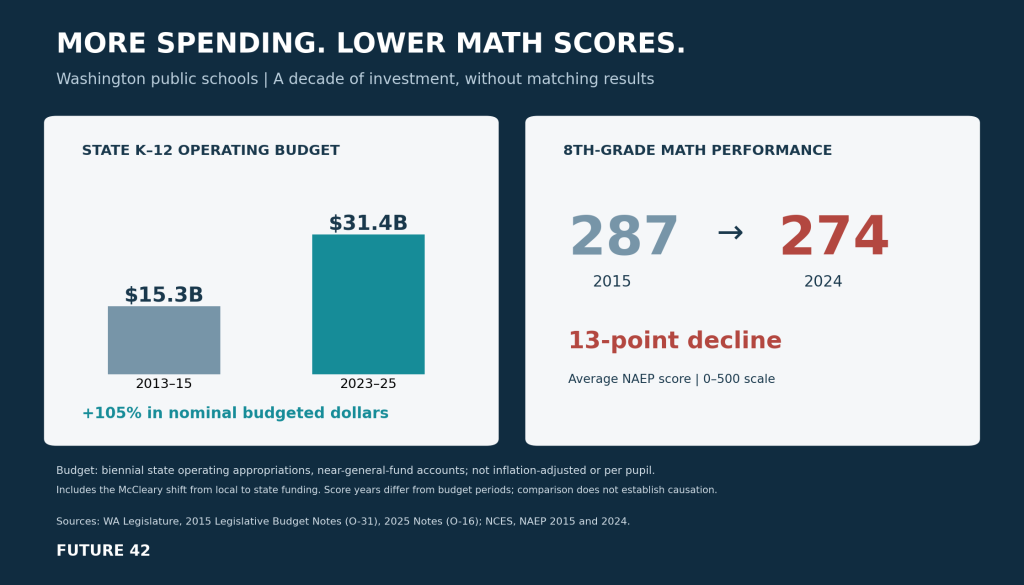
On the National Assessment of Educational Progress, Washington’s average eighth-grade math score fell from 287 in 2015 to 274 in 2024. Just 30% performed at or above NAEP Proficient in 2024, while 41% scored below NAEP Basic. These are national assessment benchmarks, distinct from Washington’s own grade-level standards.
Ferguson has an opportunity to change course right now: opt Washington into the Federal Scholarship Tax Credit (FSTC) program.
As Future 42 previously explained, the program could make educational help more affordable for families whose children need something different or something more.
Beginning in 2027, donors can receive a federal tax credit of up to $1,700 for qualifying contributions to approved nonprofit Scholarship Granting Organizations. Those organizations provide scholarships for eligible students’ educational expenses. The $1,700 limit applies to the donor’s credit, not a guaranteed scholarship for each child.
For Washington families, that could mean:
📚 Tutoring to help a struggling reader or a student falling behind in math.
💻 Computers, school supplies, and other qualifying learning resources.
🧩 Specialized services for children with disabilities or different learning needs.
🎓 Help with qualifying tuition expenses when a different school would better serve a child.
Families should have access to an education that fits their children. These scholarships can help students in public schools as well as private schools. A parent should not have to watch a child fall further behind simply because extra help is out of reach.
This should not be a partisan decision: six states with Democratic governors have opted in or announced plans to participate, including Colorado, Kansas, Kentucky, New Mexico, New York, and North Carolina. Ferguson should follow their lead and give Washington families access to the same educational opportunities.
Ferguson can make the participation decision without waiting for lawmakers to pass a new scholarship bill. His administration would then need to certify qualifying organizations and complete the federal participation requirements. Scholarships depend on donations and eligibility, but opting in opens a door that remains closed today.
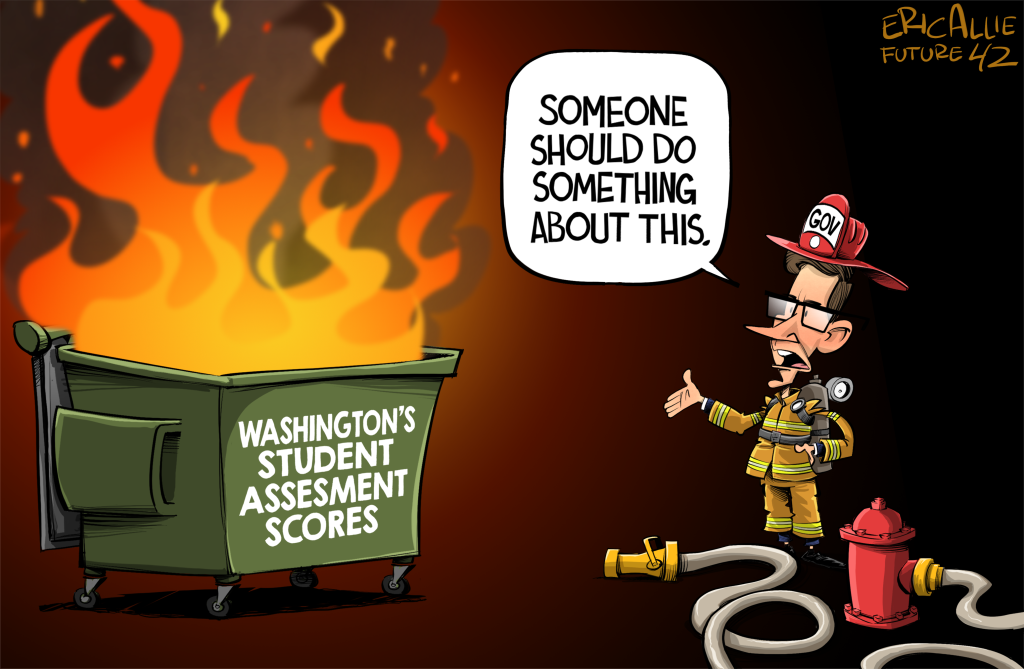
He told KOMO on November 6 that his lawyers were reviewing the rules and that he expected a decision before January 1. Washington still does not appear on the IRS’s November 13 participating-state list.
Washington does not have to accept mediocre results. The “Mississippi Miracle” shows what a sustained commitment to doing things differently can achieve. As Future 42 previously highlighted, Mississippi climbed from 49th in fourth-grade reading in 2013 to ninth in 2024, while its share of students scoring proficient or advanced rose from 21% to 32%. Meanwhile, Washington’s average fourth-grade reading score fell from 225 to 216 over that period. On the latest national assessment, Mississippi’s average was 219.
While Reykdal himself has sought to downplay Mississippi’s successes, the contrast contrast is clear: Mississippi has made substantial progress while Washington has lost ground.
The FSTC would not replicate Mississippi’s reforms, but it would give families another way to access tutoring and educational support their children need. If Ferguson believes change is overdue, he should embrace both proven classroom reforms and the opportunity to put additional learning resources within families’ reach.
The timing of Ferguson’s criticism invites skepticism, however.
But Ferguson can prove otherwise. He can pair his criticism with a concrete decision that gives families more ways to help their children succeed.
Email Gov. Ferguson and urge him to opt Washington into the Federal Scholarship Tax Credit program, giving public-school students and families across our state access to additional educational support.
Washington’s children need more than an accurate description of the problem. They need action.